Laws of Indices (Surds & Powers)
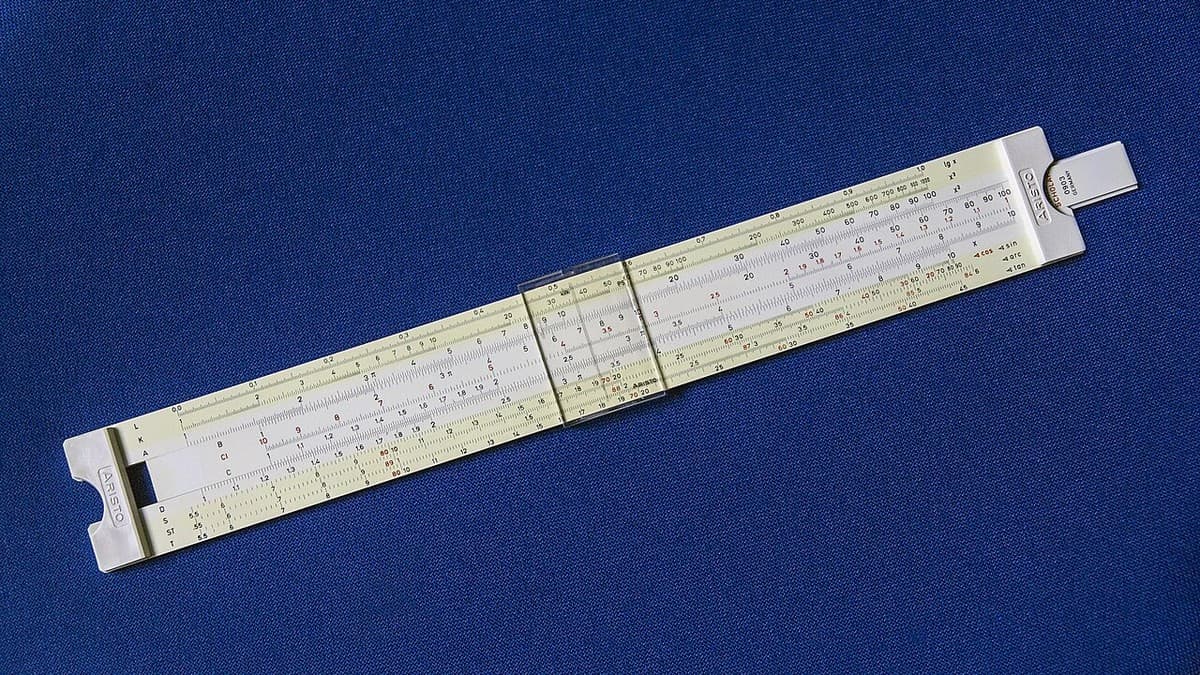
A high-yield quantitative practice drill on the Laws of Indices, Powers, Exponents, and Surds for Kerala PSC examinations (LDC, Secretariat Assistant, Sub-Inspector, CPO, and KAS). It systematically builds mastery over fundamental exponent rules ($$a^m \times a^n = a^{m+n}$$, $$\frac{a^m}{a^n} = a^{m-n}$$, $$(a^m)^n = a^{mn}$$), negative and fractional exponents ($$a^{-n} = \frac{1}{a^n}$$, $$a^{\frac{m}{n}} = \sqrt[n]{a^m}$$), solving single-variable exponential equations, comparing large powers using HCF of exponents, surd operations, rationalization, and infinite nested radicals. Study Scope Multiplication Law: $$a^m \times a^n = a^{m+n}$$ (adding exponents with identical non-zero base) Division Law: $$\frac{a^m}{a^n} = a^{m-n}$$ (subtracting exponents during quotient operations) Power of a Power Law: $$(a^m)^n = a^{mn}$$ vs tower of powers $$a^{m^n}$$ Zero Exponent Rule: $$a^0 = 1$$ for any non-zero real number $$a$$ Negative Exponents: $$a^{-n} = \frac{1}{a^n}$$ and inverted fraction rule $$(\frac{a}{b})^{-n} = (\frac{b}{a})^n$$ Fractional Exponents & Radicals: $$a^{\frac{1}{n}} = \sqrt[n]{a}$$ and $$a^{\frac{m}{n}} = (\sqrt[n]{a})^m$$ Power of Products and Quotients: $$(ab)^n = a^n b^n$$ and $$(\frac{a}{b})^n = \frac{a^n}{b^n}$$ Prime Base Factorization: Simplifying complex numerical fractions into base primes ($$2, 3, 5$$) Exponential Equations: Solving for unknown variables ($$a^{f(x)} = a^{g(x)} \implies f(x) = g(x)$$) Comparing Large Powers: Finding the greatest or least among powers ($$2^{50}, 3^{40}, 4^{30}, 5^{20}$$) using HCF of powers Surd Simplification & Rationalization: Multiplications and conjugate rationalization ($$\frac{1}{\sqrt{a}+\sqrt{b}}$$) Nested Radicals: Infinite product surds ($\sqrt{x\sqrt{x\dots}} = x$), finite product surds ($x^{\frac{2^n-1}{2^n}}$), and quadratic sum surds ($\sqrt{n(n+1)+\dots} = n+1$) Metric Exponent Prefixes: Kilo ($$10^3$$), Mega ($$10^6$$), Giga ($$10^9$$), Micro ($$10^{-6}$$), Nano ($$10^{-9}$$) Tested Competencies Apply algebraic exponent laws quickly without arithmetic calculation errors Distinguish clearly between $$(a^m)^n$$ and $$a^{m^n}$$ in problem-solving Solve linear and quadratic equations appearing in exponential powers Determine the largest or smallest number in a given set of large exponents Cover: A mechanical slide rule used historically for exponential and logarithmic calculations (CC BY-SA 4.0). Source: Wikimedia Commons. Changes: Cropped to 16:9 aspect ratio and resized to 1200x675.