
Drinking Water Treatment Operator (Grades 1 & 2) – Practice Quiz Collection
Build practical drinking water treatment knowledge for Grade 1 and Grade 2 study, operator refresher training, and everyday problem solving. Explore **14 chapters and 56 focused…
Overview & Study Guide
Build practical drinking water treatment knowledge for Grade 1 and Grade 2 study, operator refresher training, and everyday problem solving. Explore 14 chapters and 56 focused quizzes that connect treatment science, operator mathematics, equipment, safety, and compliance.
From source water to a dependable treatment process
Follow water from the watershed and wellhead through coagulation, clarification, filtration, and disinfection. Learn how laboratory results, chemical feed measurements, hydraulic limits, and equipment condition fit together—and how to use that evidence when conditions change.
This collection is designed for new operators building a foundation, operators preparing for the next certification level, and utility staff strengthening their treatment knowledge. The quizzes combine process interpretation, calculations, error diagnosis, and applied operating scenarios.
What you will practice
-
Understand the treatment barriers. Connect source-water risks with the purpose and operating limits of each treatment stage.
-
Calculate with confidence. Work through chemical dosage, the Davidson Pound Formula, purity and specific gravity, feeder calibration, detention time, loading rates, well drawdown, and specific capacity.
-
Reason through disinfection. Distinguish free and combined chlorine, interpret breakpoint behavior, and evaluate CT using the relevant residual, effective contact time, and stated conditions.
-
Use measurements to diagnose problems. Interpret turbidity, pH, alkalinity, chlorine residual, flow, head loss, and equipment observations before choosing a response.
-
Connect water quality and compliance. Study microbial protection, disinfection byproducts, corrosion control, sampling, reporting, and public-health communication.
-
Recognize essential safety controls. Review chlorine handling and emergency planning, respiratory protection, permit-space precautions, and control of hazardous energy.
Your chapter guide
-
Water Sources & Raw Water Quality — Hydrology, surface water and groundwater, well construction, aquifer behavior, and source-water monitoring.
-
Coagulation, Flocculation & Clarification — Particle destabilization, coagulants and polymers, jar testing, rapid mixing, and floc development.
-
Sedimentation & Clarifier Operations — Basin hydraulics, settling performance, sludge removal, weirs, and tube or plate settlers.
-
Granular Media Filtration & Membrane Technology — Filter media, loading, head loss, breakthrough, backwashing, membrane operation, and integrity.
-
Disinfection Principles & Chlorination Chemistry — Chlorine species, demand and residual, breakpoint chlorination, effective contact time, and CT.
-
Disinfection Byproducts & Advanced Oxidation — TTHM and HAA5 control, chloramines, ultraviolet treatment, ozone, and microbial/DBP trade-offs.
-
Corrosion Control, Iron/Manganese & Water Quality — Lead and copper, stabilization, treatment of iron and manganese, adsorption, aeration, taste, and odor.
-
Laboratory Procedures & Water Quality Testing — Representative sampling, instrument checks, turbidity, pH, DPD chlorine testing, alkalinity, hardness, and bacteriology.
-
Operator Mathematics I: Dosage & Chemical Feeds — Unit conversions, mass balances, liquid and dry chemical feeds, strength, density, calibration, and solution preparation.
-
Operator Mathematics II: Hydraulics & Basins — Tank and pipe volumes, operating storage, detention time, surface and weir loading, and filter washwater calculations.
-
Pumps, Motors, Mechanical Drives & Valves — Centrifugal pumps, operating curves, cavitation, seals and packing, bearings, motors, valves, and surge control.
-
Safety, Chlorine Gas & Confined Space — Cylinder and ton-container hazards, emergency equipment, SCBA, atmospheric testing, rescue provisions, and lockout/tagout.
-
Drinking Water Regulations & Compliance — Drinking-water standards, treatment requirements, coliform monitoring, consumer confidence reports, records, and public notification.
-
Integrated Scenarios & Practice Assessments — Plant upsets, feed failures, pressure-loss events, and mixed-topic Grade 1 and Grade 2 diagnostics.
A useful way to study
-
Choose a route. If you are new to treatment, work through the process chapters in order and use the mathematics chapters alongside them. If you already operate a plant, begin with an integrated diagnostic and revisit the skills that need attention.
-
Attempt the question before reading the rationale. For calculations, write the formula, define the quantities, and carry the units through every step.
-
Review the alternatives. Identify the incorrect assumption, conversion, process choice, or safety judgment behind each distractor.
-
Explain the result in operating terms. Ask what the number or observation establishes, which assumptions matter, and what additional evidence would be needed.
-
Revisit weak areas. Retry after a gap and solve from the conditions given rather than remembering an answer position.
Practice with the right context
The Grade 1 and Grade 2 assessments are short study diagnostics. Match your preparation to your certification authority's current exam outline and requirements. Apply operating and emergency decisions through the current approved procedures for your own system.
For authoritative reference material, consult EPA drinking water information, OSHA standards, and your state or primacy agency.
Cover credit
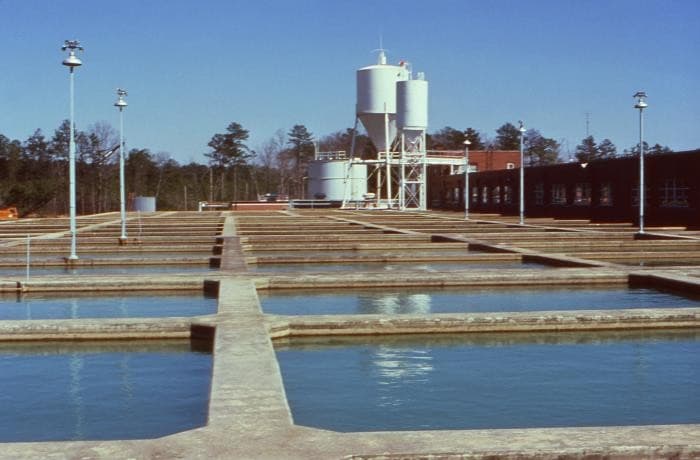
Photograph: CDC / Bob Sanders, Public Health Image Library, image 17433. This public-domain image is available free from CDC. Its use does not imply endorsement by CDC, HHS, or the U.S. Government.