04. Muscle and nervous tissue recognition – Practice Quiz
11/1/2026
📚 Subject
human biology
🎓 Exams
General practice
🗣 Language
English
🎯 Mode
Practice
🚀 Taken
0 times
Verified:
No. of Questions
25
Availability
Free
📄 Overview & Study Guide
Muscle and Nervous Tissue Recognition: Histology, Ultrastructure, and Function
Excitable tissues—muscle and nerve—are specialized for the rapid transmission of electrical impulses and the generation of mechanical force. This questionset develops systematic histological recognition skills and functional reasoning across muscle and neural tissues.
Key Learning Areas
- Skeletal, cardiac, and smooth muscle: cell morphology, striation patterns, multinucleation vs. single central nuclei, and involuntary control.
- Intercalated discs: mechanical coupling via fascia adherens and desmosomes, and electrical coupling via gap junctions in the functional cardiac syncytium.
- Histological differentiation: recognizing cross-sectional and longitudinal cuts, and distinguishing smooth muscle from dense regular connective tissue.
- Neuron anatomy: soma/perikaryon, axon hillock, dendrites, and Nissl substance (chromatophilic rough ER).
- Neuroglial cell types: CNS glia (astrocytes, oligodendrocytes, microglia, ependymal cells) and PNS glia (Schwann cells, satellite cells).
- Regenerative potential and functional adaptations: satellite cell repair in skeletal muscle, absence of regeneration in cardiac myocytes, and axonal plasticity.
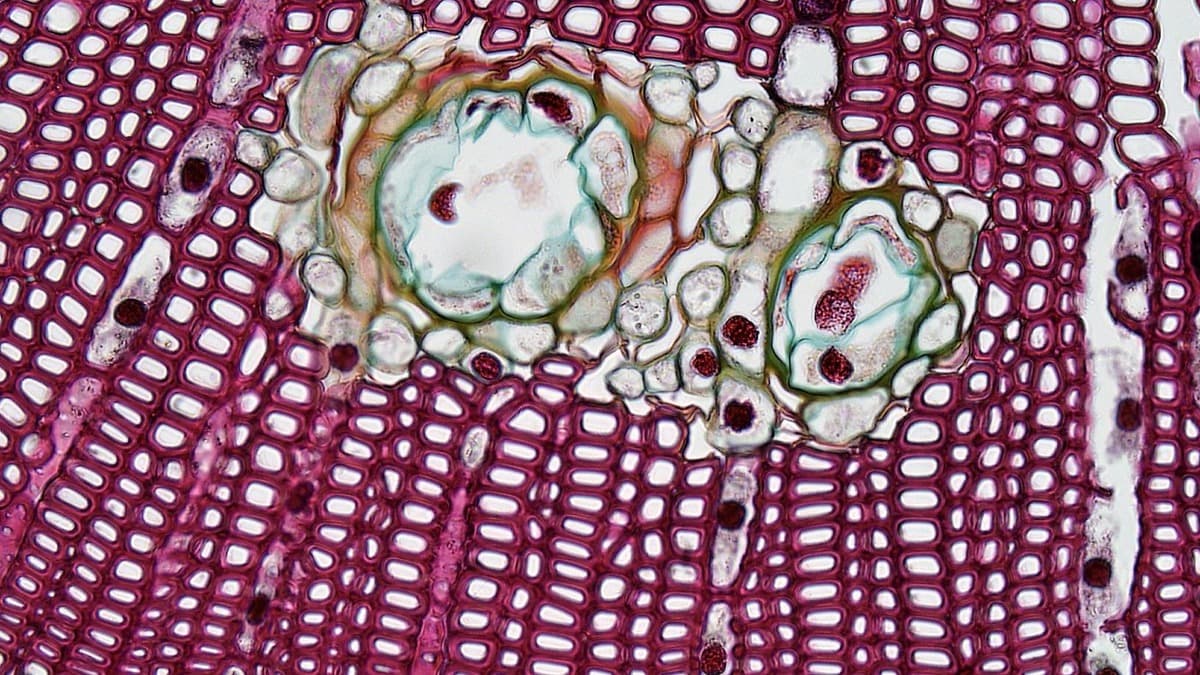
Cover image credit: Photo by Fayette Reynolds M.S. on Pexels.
🏷 Tags
#hb-04-04#human biology#histology#muscle-tissue#nervous-tissue
Timing
Results sharing
Practice options
Try a quiz as a guest. Sign in to finish and see your results.